Part of our guide: Motorcycle Courier Insurance 2026: Honest Costs & Best Cover
Your statement says you owe $18,000. The figure that actually closes the loan is $18,043.90. Both are correct on the same day. The $43.90 between them is ten days of interest, and that gap is the entire reason a payoff quote exists as a separate document from your statement. Lenders supply a per-diem figure so you can adjust the total for the day you actually pay.
What the payoff figure actually is
A 10-day payoff is a written figure from your lender showing exactly what it costs to settle your auto loan in full, honoured for ten days. It combines your remaining principal, the interest that has built up since your last payment, and any outstanding fees. Because interest accrues daily, the figure comes with a per-diem amount you add for each day past the quote date.
Why Is It Called a 10-Day Payoff?
The name comes from how long the quote is honoured — not from any law.
Toyota Financial Services tells customers directly: “A Payoff Quote is good for 10 days from the date it is provided.” Mazda Financial Services uses identical wording. North Shore Bank puts it more broadly: “Quotes for consumer and auto loan payoffs are good for 10 days.”
Ten days exists because of a timing problem. Most auto loans charge simple interest, which the CFPB describes as interest “calculated on a daily or monthly basis” against “your actual outstanding balance.” A payoff figure is therefore only exactly right on one specific day. But paying off a loan rarely happens the same day you ask — a dealer has to cut a cheque, a refinancing lender has to fund, a buyer has to arrange transfer. The ten-day window gives that process room to complete while the quote is still usable.
It is worth being clear about this: there is no federal rule requiring a ten-day window. It is an industry convention. Some rules do govern the process — Mississippi regulation 5 Miss. Code R. 3-1.11 requires a licensed lender to supply a payoff amount “within three (3) business days” of a request and states that “no fee may be charged for providing a payoff amount” — but that governs delivery, not how long the figure stands.
10-Day Payoff vs Current Loan Balance
Your statement balance is a snapshot. Your payoff amount is a settlement figure. They differ, and the CFPB is explicit about why.
| Current loan balance | 10-day payoff amount | |
| What it shows | Principal outstanding as of your statement date | Everything required to close the loan completely |
| Interest included | Only interest already billed | Interest accrued through your intended payoff date |
| Unpaid fees | May not appear | Included |
| Prepayment penalty | Not shown | Included if your contract has one |
| Stays accurate | Until the next transaction | Ten days, adjusted by per-diem |
| Where you get it | Statement or online account | Requested from the lender |
The CFPB states: “Your payoff amount is how much you will have to pay to satisfy the terms of your… loan and completely pay off your debt. Your payoff amount is different from your current balance.” It adds that the payoff figure “may also include other fees you have been charged and have not yet paid,” and that “if you are paying off your loan early, you may also have to pay a pre-payment penalty fee.”
Never send the statement balance to close a loan. Underpay by a few dollars of accrued interest and the account stays open.
Payoff quote vs payoff letter vs payoff statement
These three terms get used interchangeably, but they are not the same thing, and knowing which one to ask for saves a second phone call.
| Term | What it actually is | When you need it |
| Payoff quote | The figure itself — the exact amount to close the loan on a given date, including per-diem interest | When you are weighing the payoff against a trade-in offer or a refinance |
| Payoff letter | The written document stating that figure, its good-through date, and where to send payment | When a dealer, refinance lender or buyer needs proof of the amount |
| Payoff statement | Used two ways: by some lenders as a synonym for the payoff letter, by others to mean your regular monthly statement | Ask which one they mean before relying on the number |
In practice, asking for a “10-day payoff quote” and asking for a “10-day payoff letter” will usually get you the same document. The one to watch is payoff statement: if your lender uses it to mean your monthly statement, that is not the figure that closes the loan.
What Is Included in a 10-Day Payoff Letter?
If you already have the document in front of you, our annotated 10-day payoff letter example walks through each field in turn, including the ones people most often misread.
Credit Acceptance publishes the components plainly. A payoff figure is built from:
- Remaining principal — “the unpaid portion of your original financing.”
- Accrued interest — “from the time of your last payment to your payoff date.”
- Lender fees or prepayment penalties, if applicable.
A payoff letter will normally also carry the per-diem interest figure, the date the quote expires, and the remittance instructions — where to send funds and what reference to include.
Are There Prepayment Penalties on Auto Loans?
Sometimes. The CFPB explains that “prepayment penalties on auto loans are generally used to discourage you from paying off your loan early as it reduces the amount of interest a lender collects.”
To find out whether yours has one, the CFPB’s guidance is direct: “check your contract to see whether it contains a prepayment penalty clause. You can also check your state law to see whether it’s prohibited.” Some states prohibit them on certain loans.
There is a second trap worth knowing about. The CFPB distinguishes simple interest from precomputed interest, where “the total interest due under the loan [is] calculated immediately” and then spread across the payments. Under precomputed interest, “making extra payments does not reduce the principal amount (or interest) owed,” though you “may get a refund of some ‘unearned’ interest.” The CFPB’s advice: “If you plan to pay your loan off early, you want to make sure lenders are using a simple interest rate, which is generally more common.” Our guide to APR on a car loan explains how that rate translates into what you actually pay.
How To Calculate Your 10-Day Payoff
For the full formula, a worked example and a per-diem reference table, see how to calculate your 10-day payoff amount.
Credit Acceptance publishes the daily-interest method: “Multiply your current balance by your annual interest rate and divide by 365.”
Daily interest = Balance × APR ÷ 365
Then multiply by the number of days to your payoff date and add it to your balance.
Worked example
A $18,000 balance at 8.9% APR:
- Daily interest: $18,000 × 0.089 ÷ 365 = $4.39 per day
- Ten days of interest: $4.39 × 10 = $43.90
- Payoff on day ten: $18,000 + $43.90 = $18,043.90
Per-diem interest by balance and rate
Daily interest in dollars. Multiply by the number of days remaining in your window.
| Balance | 5.0% APR | 7.5% APR | 10.0% APR | 12.5% APR |
| $10,000 | $1.37 | $2.05 | $2.74 | $3.42 |
| $15,000 | $2.05 | $3.08 | $4.11 | $5.14 |
| $20,000 | $2.74 | $4.11 | $5.48 | $6.85 |
| $25,000 | $3.42 | $5.14 | $6.85 | $8.56 |
North Shore Bank describes the same adjustment for customers paying later in the window: add “the ‘Per Diem Interest’ (Interest Per Day) amount to the Estimated PayOff Amount for each additional day.”
These figures are illustrative. Your lender’s own calculation governs — some use a 360-day year, some apply fees. Always pay the written figure your lender provides.
How To Request a 10-Day Payoff Letter
For a step-by-step walkthrough of every request method, what your lender will ask for, and what to do if they refuse, see how to request a 10-day payoff letter.
Most lenders now issue payoff quotes through the online account, with a phone route as backup.
- Sign in to your loan account — online or in the lender’s app. Toyota Financial Services and Mazda Financial Services both direct customers to select “Payoff Quote” under Remaining Balance.
- Or call customer service and request a written payoff statement. Under Mississippi’s rule, a licensed lender must supply the figure “within three (3) business days” and “no fee may be charged.”
- Say who it goes to. If a bank, credit union or dealer needs it, authorise the lender to send it to them directly. North Shore Bank, for instance, accepts verbal authorisation by phone, or a written request with signed customer authorisation from the receiving institution.
- Check the expiry date and the per-diem before you act on the figure.
- Follow the remittance instructions exactly — the payoff address is often different from your regular payment address.
Chase’s route is typical of the online model: go to your auto account, choose “More…”, then “See a payoff quote.”
Auto lender payoff request guide
Built only from documentation each lender publishes. “Not stated” means the lender does not state it on the page reviewed — not that it does not exist.
| Lender | Where to request | Stated validity | Notes from official documentation |
| Toyota Financial Services | Website or app → “Payoff Quote” under Remaining Balance | 10 days from date provided | Amount can change if new charges post after issue |
| Mazda Financial Services | Website or app → “Payoff Quote” under Remaining Balance | 10 days from date provided | Same caveat on later charges |
| North Shore Bank | Phone with verbal authorisation; or written request with signed authorisation by fax | 10 days | Online figure valid that day only; add per-diem for each extra day |
| Chase | Online: auto account → “More…” → “See a payoff quote” | Not stated | Mails title or lien release to the address on your billing statements |
| Capital One | Help centre; title procedures vary by state | Not stated | “Once your loan is paid off, we will release our lien from your title” |
| Credit Acceptance | Account portal | Tied to a specific date | Publishes the daily-interest formula and payoff components |
When Do You Need a Payoff Quote?
Any time a third party has to settle your loan on your behalf, or you want the loan closed on an exact date.
Trading In a Financed Car
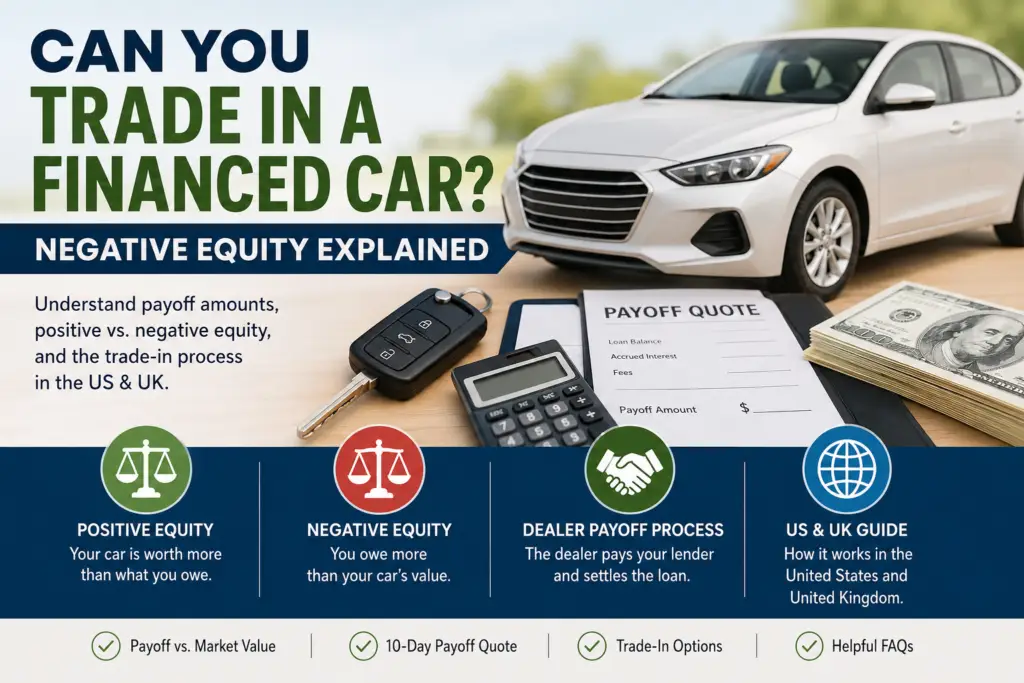
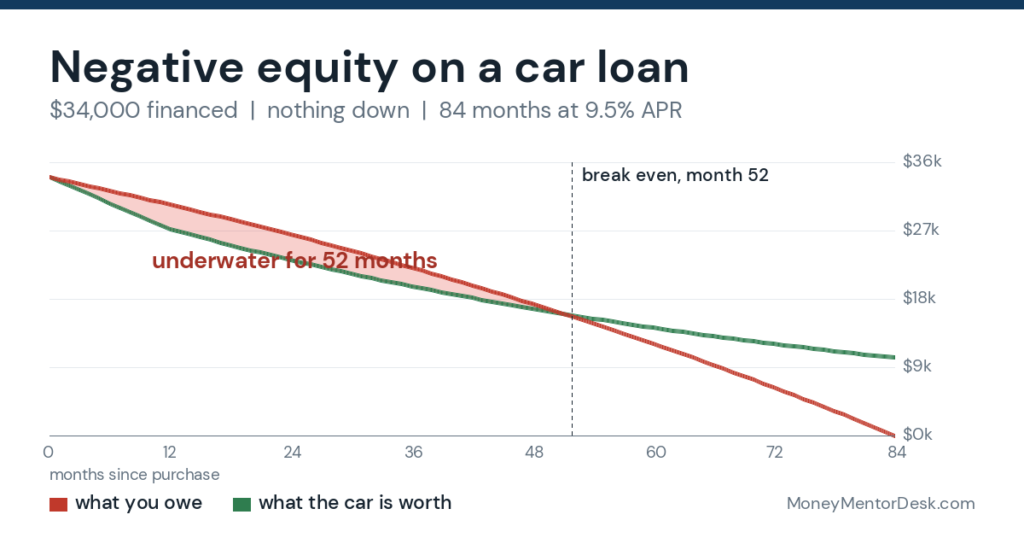
The dealer needs a written figure to settle your existing loan before the trade completes. If the payoff exceeds the trade value, the shortfall is negative equity and has to be paid or rolled into the new loan. Our full guide covers trading in a financed car step by step.
Selling a Car with a Loan
A private buyer’s funds have to clear the lien before the title can transfer. The payoff letter tells both sides the exact number and where to send it — which is why the ten-day window matters, since private sales rarely close the same day.
Refinancing a Car Loan
Your new lender pays your old one directly and needs the payoff figure to size the new loan. Because funding takes days, the quote must still be valid when the money moves. Timing matters here for other reasons too — see when to refinance a car loan and when to wait.
What Happens After You Pay Off the Loan?
The lender releases its security interest in the vehicle, and you receive proof.
Capital One states: “Capital One is responsible for releasing our lien. Once your loan is paid off, we will release our lien from your title.”
Lien Release and Title Transfer
How you receive the title depends on whether your state uses paper or electronic titles.
Chase describes both routes. For paper titles: “We will mail your title or lien release to the mailing address that appears on your auto billing statements.” For electronic titles: “If the title is held electronically (paperless), your state’s Department of Motor Vehicle (DMV) will be sending the lien free title, so you’ll need to confirm your address with them.”
One state-specific exception is worth flagging. Chase notes that “Florida doesn’t generate a lien-free title when the electronic lien is released.”
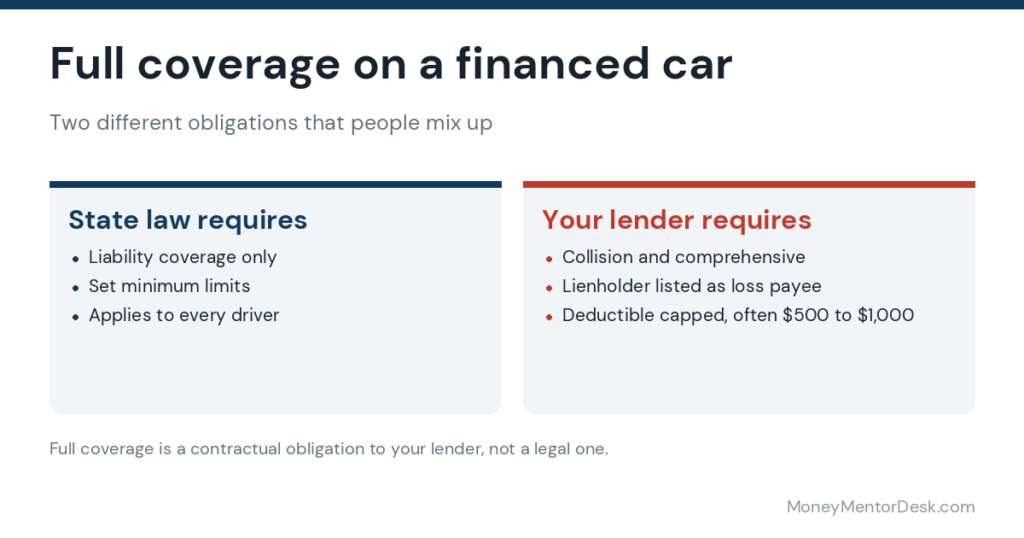
Two things to do once you pay: confirm the mailing address your lender holds, and check with your state DMV if the title is electronic. This is also the point at which your insurance requirements may change — see whether you need full coverage on a financed car.
What Happens If Your Payoff Quote Expires?
The quote stops being a settlement figure and becomes an estimate. Request a fresh one.
If the ten days lapse, interest has continued accruing and the amount you were quoted no longer closes the loan. Paying it leaves a small residual balance — which keeps the account open, can keep the lien in place, and may generate another statement.
If you are still inside the window but paying later than the quote date, you do not need a new letter. North Shore Bank’s instruction covers it: add the per-diem interest for each additional day. Outside the window, ask for a new quote — under Mississippi’s rule, licensed lenders cannot charge you for one, and most lenders issue them free regardless.
Common Questions
Is a 10-day payoff the same as my loan balance?
No. The CFPB states that “your payoff amount is different from your current balance.” Your balance shows principal as of the statement date. The payoff amount adds interest accrued through the day you intend to pay, plus any unpaid fees and any prepayment penalty in your contract.
How long is a 10-day payoff quote valid?
Ten days from the date it is issued, according to Toyota Financial Services, Mazda Financial Services and North Shore Bank. This is a lender convention rather than a legal requirement, so confirm the expiry date printed on your own quote — not every lender uses the same window.
How do I calculate my 10-day payoff amount?
Credit Acceptance’s published method is to multiply your current balance by your annual interest rate and divide by 365. That gives daily interest. Multiply by the number of days to your payoff date and add it to your balance. Your lender’s written figure always governs.
Does a 10-day payoff include fees?
It can. Credit Acceptance lists remaining principal, accrued interest since your last payment, and “lender fees or prepayment penalties, if applicable.” The CFPB similarly notes the payoff amount “may also include other fees you have been charged and have not yet paid.”
Can I be charged for a payoff quote?
Not by a licensed lender in Mississippi, where the regulation states “no fee may be charged for providing a payoff amount.” Rules vary by state, but payoff quotes are typically issued free. Check your loan agreement if you are unsure.
Will paying off early save me interest?
Only if your loan uses simple interest. The CFPB explains that with precomputed interest, “making extra payments does not reduce the principal amount (or interest) owed,” though you may receive a refund of some unearned interest. Simple interest is “generally more common.”
When will I get my title after paying off the loan?
It depends on your state. Chase mails the title or lien release to the address on your billing statements where titles are paper; where titles are electronic, your state DMV issues the lien-free title. Chase notes Florida “doesn’t generate a lien-free title when the electronic lien is released.”
Sources
- Consumer Financial Protection Bureau — What is a payoff amount? Is it the same as my current balance?
- Consumer Financial Protection Bureau — Simple interest rate vs precomputed interest on an auto loan
- Consumer Financial Protection Bureau — Can I prepay my loan at any time without penalty?
- Toyota Financial Services — Where can I find payoff information for my loan account?
- Mazda Financial Services — Where can I find payoff information for my loan account?
- North Shore Bank — Can you send a 10-day loan payoff quote to my bank?
- Chase — Auto loan payoff FAQ
- Capital One — Auto loan payoff actions
- Credit Acceptance — Calculating your payoff amount
- Mississippi Department of Banking and Consumer Finance — 5 Miss. Code R. 3-1.11, Loan Payoff Requests
Verification status
Fully source-verified. Every factual claim trace to a named regulator or an official lender page that was opened and read. Two lender pages (Nissan Motor Acceptance, Carvana) would not render and were excluded rather than guessed at. No statistic, date, rate or lender term is invented.
Written by Nimra Saleem for MoneyMentorDesk.com. Reviewed against CFPB guidance and official documentation from Toyota Financial Services, Mazda Financial Services, Chase, Capital One, Credit Acceptance and North Shore Bank. This article is educational only and is not financial advice. Payoff procedures, per-diem calculations and title timelines vary by lender and by state — confirm the figures with your own lender in writing.