Part of our guide: Motorcycle Courier Insurance 2026: Honest Costs & Best Cover
The fastest route
Here is how to request a 10-day payoff letter from your auto lender in under two minutes: log in to your lender’s website or app and look for “Payoff Quote,” “Request a Payoff,” or “See a Payoff Quote” — usually under your balance or payments menu. Most major lenders generate the letter instantly as a PDF. If yours doesn’t, call the servicing number on your statement and ask for a payoff quote with a good-through date at least 10 days out. Have your account number, VIN, and the last four digits of your SSN ready, and say where the letter should be sent.
This guide is about the process — where the button is at each major lender, who else can request the letter on your behalf, and what to do when the payoff arrives late. If you need the document explained first, start with our main guide: what is a 10-day payoff.
Key Takeaways
- Most large auto lenders now issue payoff quotes instantly online — you rarely need to wait for mail.
- The number that matters is not “10 days.” It’s the good-through date printed on the letter.
- A refinance lender, dealer, or online buyer can request the payoff for you, but usually needs your written authorization.
- Keep paying your old lender until the balance actually reads zero — this is the single most expensive mistake in a refinance.
- Getting the letter is the easy half. Getting your title and lien release afterward is the half that goes wrong.
What You Need Before You Request a 10-Day Payoff Letter
Every lender asks for some combination of these. Gathering them first turns a 12-minute phone call into a 4-minute one.
- Your loan or account number — on your monthly statement or in your online account.
- The VIN — 17 characters, on your registration, insurance card, and the driver’s-side dashboard.
- Identity verification — typically the last four digits of your Social Security number, your date of birth, or a one-time code sent to the phone on file.
- A delivery destination — your own email, or the name, fax, and address of the refinance lender, dealer, or buyer who needs it.
That fourth item is the one people forget. If a new lender is paying off the loan, the payoff letter often has to go directly to them, and it needs to carry the remittance address and account number the old lender wants the check made out to.
Worth checking first: confirm your loan has no prepayment penalty. Most mainstream auto lenders don’t charge one — Chase states plainly that “there’s no pre-payment penalty” on its auto loans — but subprime and buy-here-pay-here contracts are a different story. The CFPB is blunt about it: “Your contract and state law will determine whether you can pay off your auto loan early.” Some states prohibit prepayment penalties outright; others don’t. Check your contract and your TILA disclosures. This matters because a payoff amount can include, in the CFPB’s words, “other fees you have been charged and have not yet paid” — which is exactly where a penalty surfaces.
What Information Your Lender May Ask For
Requirements vary, but the request usually involves some combination of:
- Loan or account number
- Last four digits of your Social Security number
- Date of birth
- VIN
- A one-time passcode sent to the phone or email on file
- The date you intend to pay
- Where to send the letter
- For third-party requests: a signed authorization form naming the recipient
If you are locked out of your online account, expect a longer identity check by phone.
How to Choose the Payoff Date
This is the decision that determines whether the letter works or expires uselessly. Work backward from how you plan to pay.
| How you will pay | Clearing time | Good-through date to request |
| Wire transfer | Same day | 2–3 days out |
| Payment from the lender’s own portal | Same or next business day | 3–5 days out |
| ACH / bank transfer | 1–3 business days | 7 days out |
| Bank bill pay (may mail a paper check) | 5–10 days | 12–15 days out |
| Cashier’s check by mail | 5–10 days | 12–15 days out |
Two things to build in. First, these are calendar days, so weekends and holidays burn the window. Second, if a scheduled monthly payment falls inside the window, tell the lender — it changes the figure.
Method 1: Request Your Payoff Letter Online (Fastest)
This is the route to try first. At most major servicers the quote is generated on demand and downloadable as a PDF in under two minutes.
The general path: Sign in → open the vehicle account → look for Payoff, Payoff Quote, request a Payoff, or More → choose a payoff date → download or email the letter.
Two details people miss:
- You often get to choose the good-through date. If you’re mailing a check, pick a date 10–15 days out, not tomorrow. If you’re paying online today, pick today.
- The balance on your dashboard is not the payoff. GM Financial spells this out: “Interest charges, fees or other charges applied to your account could create a difference in the two balances. Your payoff balance is ultimately what you owe on your account.” Paying the dashboard number leaves a small residual balance and an open loan.
Method 2: Request a Payoff Quote in Your Lender’s App
Toyota Financial Services, GM Financial, Credit Acceptance and most other large servicers expose the same payoff function in their apps.
- Toyota Financial Services: log in and select Payoff Quote under the Remaining Balance section of your dashboard. TFS states a payoff quote “is good for 10 days from the date it is provided,” while cautioning the amount can still change if returned payments or fees post to the account afterward.
- GM Financial: log in to MyAccount or the mobile app and select Request a Payoff under the Payment Progress section.
The app is usually the better option if your lender emails the PDF, because you can forward it straight to your refinance lender from your phone.
Method 3: Request a 10-Day Payoff Letter by Phone
Use the phone when the online quote is missing, the account is past due, the loan is in a payment deferral, or a third party needs the letter faxed somewhere specific. Credit union and smaller-bank loans often have no self-service payoff at all.
Call the servicing number printed on your statement — not the number for new loan applications, which will transfer you anyway. Ask for:
“A payoff quote with a good-through date of [specific date], sent to [email/address], including the per-diem interest amount and the remittance address for the final payment.”
Naming the per diem matters. It’s the daily interest figure that lets you calculate the correct amount if you pay a few days late — the mechanics are covered in our guide to how APR works on a car loan.
Some lenders route payoff requests through a dedicated line. Credit Acceptance, for example, publishes 1-800-634-1506 for payoff quotes, available seven days a week.
Method 4: When Someone Else Requests the Payoff for You
You are frequently not the one who needs the letter. Four common situations:
If You Are Refinancing the Loan
Your new lender requests the payoff from your old lender and mails or wires the funds. Capital One describes the flow: it sends a payoff check to your previous lender, and you should “keep making payments to your previous lender” until “Capital One’s payoff check is processed and your balance is zero.” If the check overshoots, “your previous lender will issue you a refund if overpayment occurs.”
Do not stop paying the old loan early. Capital One warns the account can go past due, which “may delay our ability to finalize refinancing” — and a late mark land on your credit report for a loan you thought was gone. If you’re still deciding, read when to refinance a car loan and when to wait first.
If You Are Trading the Car In
The dealer requests the payoff and rolls it into the new deal. Get a copy yourself and check the figure against your own quote — the payoff is what determines whether you have equity or negative equity being rolled into the next loan. Our guide to trading in a financed car walks through that math.
If You Are Selling to Carvana, CarMax or Another Online Buyer
Carvana, CarMax and similar buyers pay your lender directly and send you any difference. They need a payoff quote valid through the date the transaction is expected to close, which is why “10-day payoff” and “Carvana” get searched together so often. Keep making your scheduled payment if one falls due during the process; the lender refunds the overpayment.
If You Are Selling to a Private Buyer
Harder, because the buyer needs assurance the lien will clear. The usual fix is to close the sale at a branch of your lender, where the payoff can be made and the lien release started on the spot.
In every third-party case, expect an authorization step. Most lenders will not release account details to someone who isn’t on the loan without a signed authorization form or a recorded verbal consent from you.
Where to Find the Payoff Quote at Major Auto Lenders
Verified against each lender’s own help pages in August 2026. Processes change — confirm in your account before relying on any row.
| Lender | Online | App | Where to find it | Notes |
| Chase Auto | Yes | — | Sign in → select auto account → More… → See a payoff quote | No prepayment penalty. Title or lien release is mailed to the address on your billing statement — verify it before paying off |
| Ally Auto | Yes | Yes | Snapshot → select vehicle → Get Payoff Quote, or Payments → View Payoff Quote | Mail-in payments go to Payment Processing Center, P.O. Box 71119, Charlotte, NC 28272-1119. Direct Pay customers must switch to Auto Pay to make extra payments online |
| Toyota Financial Services | Yes | Yes | Dashboard → Remaining Balance → Payoff Quote | Quote “good for 10 days from the date it is provided” |
| GM Financial | Yes | Yes | MyAccount → Payment Progress → Request a Payoff | Title and lien release timing “vary by state”; final payment must clear first |
| Capital One Auto | Refi side | Yes | Handled by the refinance team; they pay your prior lender | You keep paying the old loan until the balance is zero; overpayment refunded |
| Credit Acceptance | Yes | Yes | Customer portal or app → account details, or call 1-800-634-1506 | Quote valid through the future date you select; expires after |
| Bank of America | Yes | Yes | Auto loan account → payoff amount, or call 844-892-6002 | Payoff FAQs published on its auto loan help page |
If your loan is with a credit union or a smaller bank, there may be no online payoff at all — call the branch. This is one of the practical differences between financing sources covered in dealer vs bank financing.
How Long It Takes to Get a 10-Day Payoff Letter
| Channel | Typical turnaround |
| Online account / app (PDF) | Instant to a few minutes |
| Email request | Same day to 2 business days |
| Phone (emailed or faxed) | Same day |
| Phone (mailed hard copy) | 3–7 business days |
| Third-party request needing authorization | 1–3 business days after your consent is on file |
Ask for it by email or PDF. A mailed letter can burn half its own good-through window in transit — which is the entire reason the next section exists.
What to Check When You Receive the Payoff Letter
For a field-by-field walkthrough of the document itself, see our 10-day payoff letter example, which annotates a full sample quote.
Read these six fields before you send any money.
- Payoff amount. Confirm it is labeled as a payoff, not a current or principal balance. GM Financial explains the difference: “Interest charges, fees or other charges applied to your account could create a difference in the two balances. Your payoff balance is ultimately what you owe on your account.”
- Good-through date. The real deadline. Check your payment method can clear by then.
- Per-diem interest. The daily amount that accrues after the quote date. Not every letter shows it — ask if it is missing.
- Payment instructions and remittance address. Payoffs often go to a different address than regular monthly payments. Sending a payoff to the standard payment lockbox is a common cause of misapplied final payments.
- Loan and vehicle details. Account number, VIN, and your name spelled correctly. A refinance lender will reject a letter with a mismatch.
- Any pending items. Returned payments, late fees, or repair charges that have not posted yet. Toyota Financial Services notes that although its payoff quote is “good for 10 days from the date it is provided,” the amount can still change if fees or returned payments post afterward.
Check the Good-Through Date Before You Do Anything Else
The letter is not valid for 10 days from when you open it. It’s valid through the specific calendar date printed on it, and that clock started when the lender generated the quote.
Three things to check the moment you receive it:
- The good-through date — and whether your payment method can realistically clear by then. A mailed personal check needs 5–10 days. An ACH transfer needs 1–3. A wire clears same day.
- The per-diem amount — the daily interest that accrues after the quote date. This is how you correct the figure if you’re going to be late.
- The remittance address — payoffs frequently go to a different address than regular monthly payments. Sending a payoff to the standard lockbox is a common cause of misapplied final payments.
Those are calendar days, not business days. A quote issued on a Friday before a holiday weekend loses three of its days before anyone is at a desk.
How to Send the Payoff Once You Have the Letter
Ranked by how likely they are to land inside the window:
- Wire transfer — same-day, traceable, usually a $15–$30 fee. Best when the good-through date is tight or the amount is large.
- Online payment from the lender’s own portal — often the cleanest option, since it applies as a payoff rather than a regular payment. Chase, for example, offers a “Pay off now” option directly from the quote screen and credits same-day for payments made before 11 p.m. ET on business days from a Chase account.
- ACH / bank bill pay — 1–3 business days, but your bank may mail a paper check on your behalf, which quietly turns this into the slowest option. Check before assuming.
- Cashier’s check by mail — reliable but slow. Use certified mail with tracking.
- Debit card via a third-party processor — Ally routes these through CheckFreePay, which charges a $3.75 fee. Fine for convenience, not for speed.
One rule regardless of method: do not cancel autopay until the payoff has posted and the balance reads zero. If the payoff is short by even a few dollars of accrued interest and autopay is already off, the account goes delinquent on a loan you believed was closed.
What Happens If Your Payment Misses the Good-Through Date
This is the most common failure, and it is fixable.
What happens: interest kept accruing at the per-diem rate. The lender applies your payment, and a small residual balance — often $5 to $60 — remains. The loan stays open. The lien stays on the title. Interest keeps running on the residual.
What to do:
- Call the lender and ask for the current payoff, not a new 10-day quote.
- Pay the residual electronically the same day.
- Ask them to confirm in writing that the account is paid in full and the lien release has been initiated.
- Check your credit report in 30–60 days to confirm the account reports as closed with a zero balance.
If a third party sent the payoff — a refinance lender or a car buyer — they normally cover the shortfall, but the account holder is the one the delinquency reports against. Follow up yourself rather than assuming it was handled.
Can you cancel a payoff request? Requesting a quote does not obligate you to anything — it’s an informational document, and asking for one has no effect on your loan or your credit. Cancelling a payoff payment already in flight is a different matter and depends on the method; wires and posted electronic payments generally can’t be reversed.
After the Payoff Clears: 6 Things You Must Do
Getting the letter is the easy half.
- Confirm a zero balance in writing. A screenshot of a $0 dashboard is not a paid-in-full letter. Ask for the letter.
- Track your title or lien release. Chase mails the title or lien release to the address on your billing statements — verify that address before you pay off, not after. In electronic-title states, your DMV issues the lien-free title; Chase flags Florida specifically, where the state does not automatically generate a lien-free title on electronic lien release and you must contact the Florida DMV to request one. GM Financial notes that title and lien release processes “vary by state” and that the final payment must be received and processed first.
- Cancel autopay — but only after step 1.
- Claim your refunds. These are not automatic and are the most-forgotten money in the whole process:
- GAP coverage — if you paid upfront and paid the loan off early, you are usually owed a prorated refund. You generally have to ask. See is GAP insurance worth it.
- Extended warranty / service contract — same principle, prorated by time or mileage.
- Overpayment — if the payoff overshot, the lender refunds it. Capital One confirms the previous lender issues the refund when overpayment occurs.
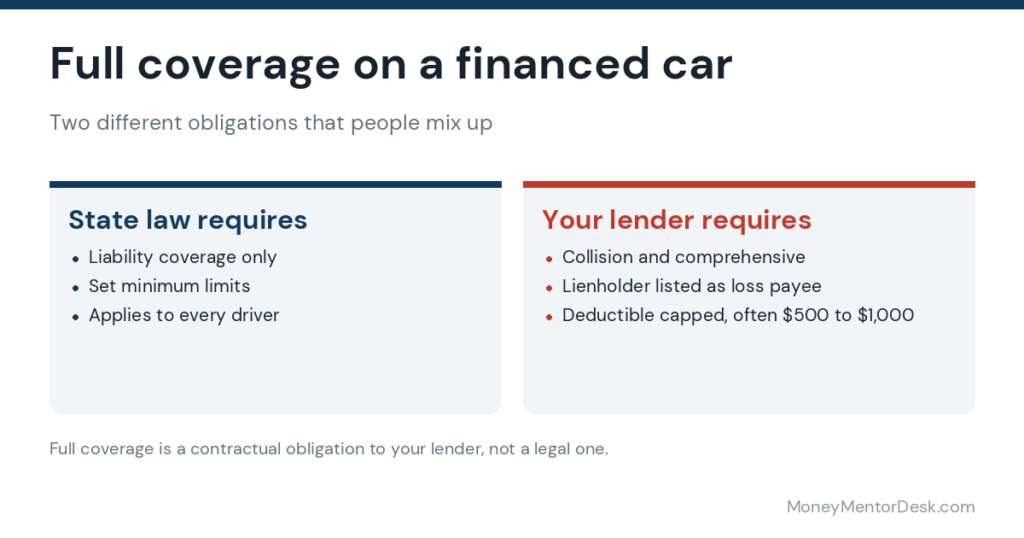
- Update your insurance. With the lien gone, the lender comes off the policy as loss payee. Whether you drop comprehensive and collision is a separate decision — see do I need full coverage on a financed car.
- Check your credit report at 30 and 60 days. The account should show closed, paid, zero balance. A paid-off installment loan can temporarily dip your score by reducing your credit mix — that’s normal and not a reason to avoid paying it off.
Common Problems Getting a Payoff Letter (and How to Fix Them)
There’s no payoff option in my online account
Common with credit unions, smaller banks, and accounts that are past due or in deferral. Call the servicing number on your statement.
The lender won’t give the payoff to my refinance lender
You need to authorize it. Ask what form they need — most have a one-page third-party authorization, and some accept recorded verbal consent while you’re on the line.
The payoff is higher than my car is worth
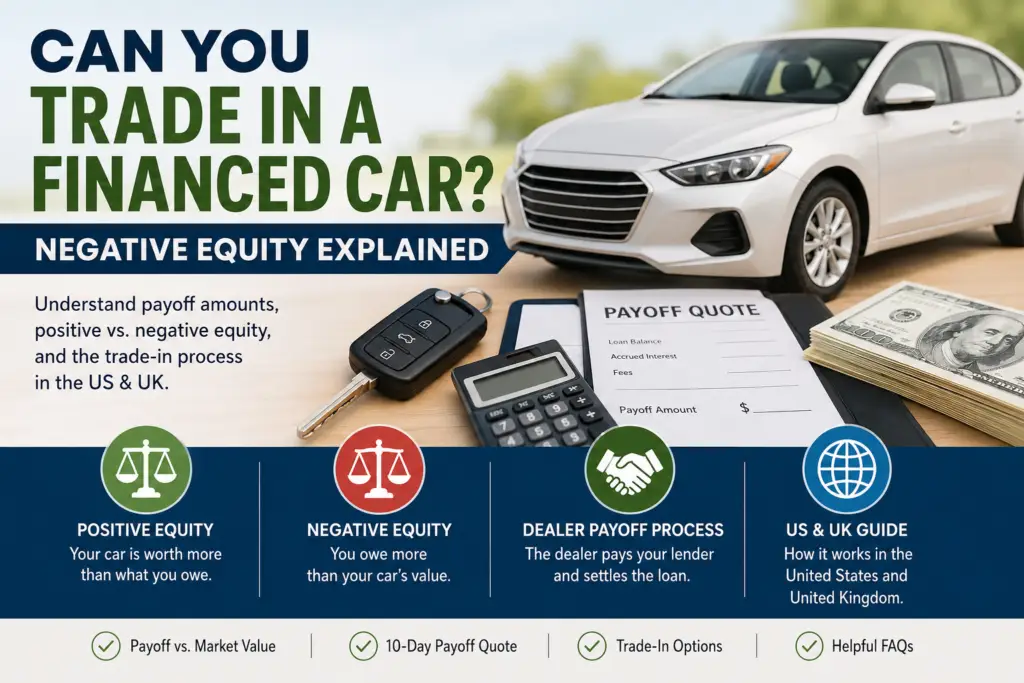
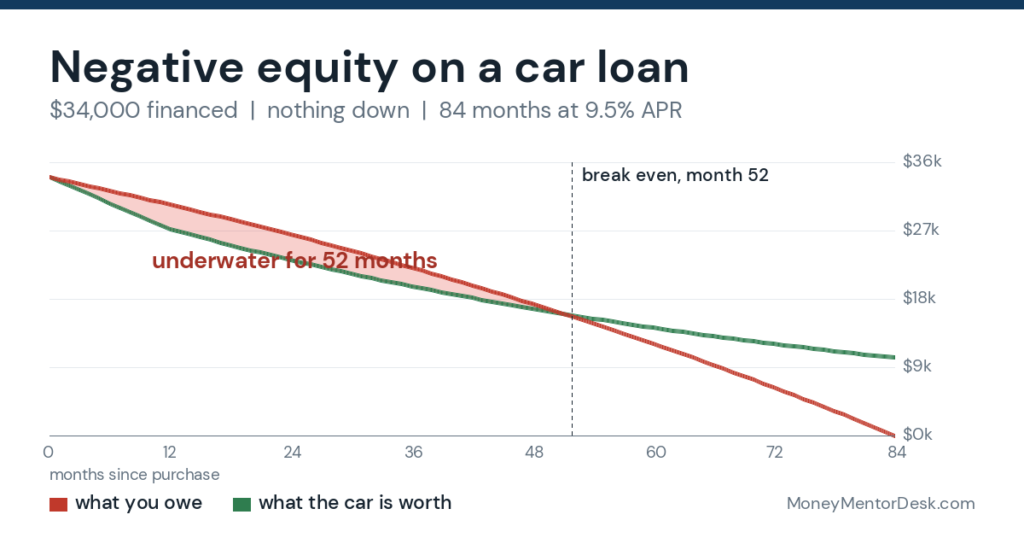
That’s negative equity, and it changes what you should do next rather than whether you can get the letter. Start with what is negative equity, then can you trade in a financed car.
They want to charge me for the payoff quote
Uncommon on auto loans. Ask which term of your contract authorises it and get the answer in writing. Whether a fee is permitted comes down to your contract and your state’s law, so check both before paying it.
My final payment was applied as a regular payment
Usually caused by sending the payoff to the standard payment address instead of the payoff remittance address. Call and ask them to reapply it as a payoff, effective the date received.
I paid it off but the title never came
Timelines are set by state law and your state DMV, not by the lender’s convenience — and some states are strict. New York’s Department of Financial Services states that once the loan is satisfied, the lender has three business days to provide the release and notify the DMV. If nothing arrives, request proof of satisfaction through the DMV or go back to the lender directly, then confirm with the DMV that the lien is removed and get a new title. Look up your own state’s deadline — it’s your leverage.
What to Do If You Can’t Get a 10-Day Payoff Letter from Your Lender
No payoff option appears in your online account. Common with credit unions, smaller banks, and accounts that are past due or in a deferral. Call the servicing number on your statement.
The lender won’t release the payoff to your refinance lender or dealer. You need to authorize it. Ask what form they require — most have a one-page third-party authorization, and some accept recorded verbal consent while you are on the call.
The letter has no per-diem figure. Ask for it directly. Without it you cannot correct the amount if you pay late.
They want to charge you for the payoff quote. Ask which term of your contract authorizes the fee and get the answer in writing. Whether it is permitted depends on your contract and your state’s law.
Your final payment was applied as a regular payment. Usually caused by sending the payoff to the standard payment address instead of the payoff remittance address. Call and ask them to reapply it as a payoff, effective the date received.
The payoff is more than the car is worth. That is negative equity. It does not stop you getting the letter, but it changes what you should do next — see what is negative equity.
You paid it off but no title arrived. Contact the lender for proof of lien release first, then your state DMV. Look up your own state’s deadline; New York’s three-business-day rule is an example of the kind of leverage state law can give you.
Frequently Asked Questions About 10-Day Payoff Letters
How do I get a 10-day payoff letter?
Log in to your lender’s website or app and select the payoff or payoff quote option, usually near your balance or payments menu. Most major lenders issue it instantly as a PDF. If there’s no online option, call the servicing number on your statement and request a payoff quote with a good-through date at least 10 days out.
Is the 10 days business days or calendar days?
Calendar days. The letter is valid through a specific printed date, and weekends and holidays count against it. A quote issued Friday before a long weekend effectively loses three working days.
Can someone else request my payoff letter?
Yes — a refinance lender, dealer, or car buyer commonly does. Most lenders require your written or recorded authorization before releasing account details to a third party.
Does requesting a payoff quote affect my credit?
No. It’s an informational document about an existing account. There’s no credit inquiry and no obligation to pay off the loan.
How long is a 10-day payoff good for?
Through the good-through date on the letter. Toyota Financial Services, for example, states its payoff quote is good for 10 days from the date provided, while noting the amount can change if new fees or returned payments post.
What if my payment arrives after the good-through date?
A small residual balance remains and the loan stays open. Call for the current payoff figure, pay it electronically the same day, and get written confirmation the account is paid in full.
Should I stop paying my old lender once the payoff is requested?
No. Keep paying until the balance actually reads zero. Capital One explicitly tells refinance customers to keep paying the previous lender until its payoff check is processed; any overpayment is refunded.
Do I need a payoff letter to sell my car to CarMax or a similar buyer?
Usually not. CarMax says it needs your lien holder’s name and contact information and your lien account number, and that it will contact your lender to arrange the payoff itself.
Sources
- CFPB — What is a payoff amount and is it the same as my current balance?
- CFPB — Can I prepay my loan at any time without penalty?
- Chase Auto — Loan payoff FAQs
- Ally Auto — Payoff quotes help and FAQs
- Toyota Financial Services — Where can I find payoff information for my loan account?
- GM Financial — I paid off my car, now what?
- Capital One — Paying your previous auto lender
- Credit Acceptance — How to request a payoff quote
- Bank of America — Auto loan FAQs
- New York State Department of Financial Services — How to obtain a lien release on a vehicle
Lender processes and phone numbers verified August 2026. Servicer procedures change — confirm details in your own account before acting.