
Part of our guide: PCP vs HP: Which Is Cheaper? 5 Key Differences (UK)
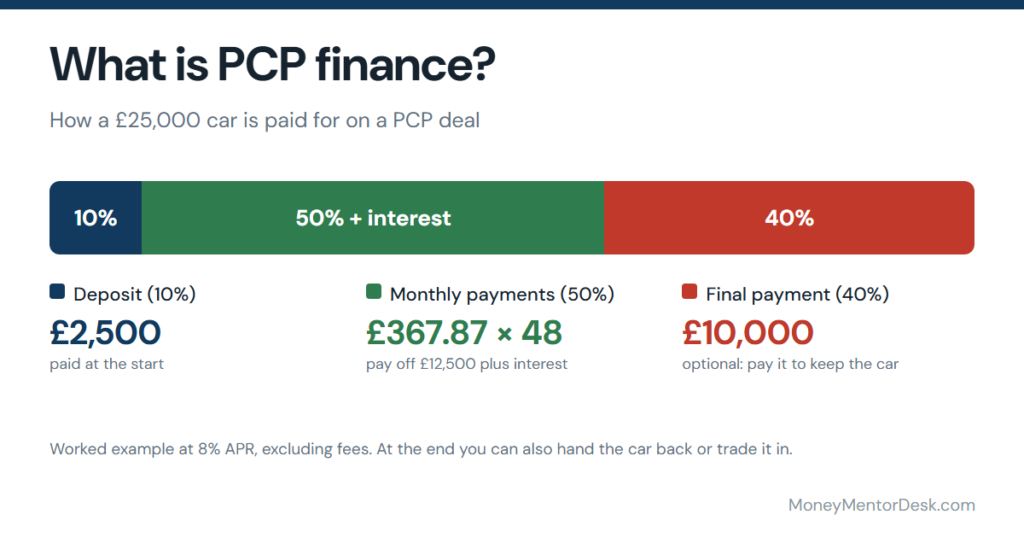
A balloon payment on car finance is the large optional final payment at the end of a PCP, set at the start as the guaranteed minimum future value of the car. Pay it and the car is yours. Hand the car back instead and you owe nothing more, provided you are within the mileage limit and the car is in the agreed condition.
It is not a fee and it is not extra. It is part of the price of the car that you agreed not to pay yet, and you are charged interest on it for the whole agreement. On a £25,000 car over four years at 8% APR, deferring £10,000 costs an extra £1,432.96 in interest.
Balloon payment car finance: the short answer
| Question | Answer |
|---|---|
| Is it compulsory? | No. It is optional, and handing the car back instead is a contractual route |
| Which agreements have one? | PCP always. Hire purchase and conditional sale normally do not |
| Do you pay interest on it? | Yes, for the whole agreement, which is why PCP costs more in total |
| What if the car is worth less than the balloon? | Hand it back. The lender carries that loss, not you |
| Can you finance the balloon? | Usually yes, and it is the most expensive of the sensible options |
| Can you pay it monthly? | Only by refinancing it into a new agreement |
How balloon payment car finance works
At the start of a PCP the lender estimates what the car will be worth when the agreement ends, given the term and the annual mileage you have agreed. That figure becomes the balloon, also called the guaranteed minimum future value or GFV.
Your monthly payments then cover the gap between the amount financed and that final figure, plus interest on everything you owe. Because the balloon sits on the balance for the whole term, interest accrues on it every month even though you have not used the money.
Three things drive the size of the balloon:
- The term. A longer agreement means an older car at the end and a smaller balloon.
- The mileage limit. A higher allowance means a more worn car and a smaller balloon, which is why raising your mileage raises your monthly payment.
- How well the model holds value. Two cars at the same price can carry very different balloons.
What deferring the money actually costs
On a £25,000 car with a £2,500 deposit over 48 months at 8% APR, the size of the balloon changes both the monthly payment and the total:
| Balloon | Monthly | Total paid | Interest |
|---|---|---|---|
| £0 (hire purchase) | £546.35 | £28,724.80 | £3,724.80 |
| £5,000 | £457.11 | £29,441.28 | £4,441.28 |
| £10,000 | £367.87 | £30,157.76 | £5,157.76 |
| £13,000 | £314.32 | £30,587.36 | £5,587.36 |
That is the trade at the heart of balloon payment car finance: a £13,000 balloon cuts £232 a month off the payment and adds £1,862 to the total. That is the trade, and for many people it is a reasonable one. The mistake is not knowing you made it.
Your five options when the balloon payment falls due
- Pay it and keep the car. Cheapest overall if you have the money. There is often an option-to-purchase fee on top.
- Hand the car back. You owe nothing more, subject to mileage and condition. You walk away with no car.
- Part-exchange it. If the car is worth more than the balloon, that surplus becomes the deposit on your next agreement.
- Refinance the balloon. A new agreement over the balloon amount, so you keep the car and pay monthly. The most expensive route, for reasons below.
- Sell the car and settle. Sell privately or to a buying service, pay the settlement figure, keep any surplus. Only possible once the finance is cleared, because the car is not yours until then.
Can’t afford balloon payment on car finance? Your options
Not being able to pay is the most common reason people look this subject up, and it is a designed-for situation rather than a crisis. You are not in default and you are not being chased. You simply choose a different one of the five routes.
If you can’t afford the balloon payment on your car, work through these in order:
- Find out what the car is actually worth. Get two or three valuations. This single number decides everything that follows.
- If it is worth more than the balloon, part-exchange it. The surplus is real money and it becomes your next deposit.
- If it is worth about the same or less, hand it back. The guarantee exists precisely for this, and the shortfall is the lender’s problem.
- Only refinance if you genuinely want to keep this car and cannot pay the balloon outright.
Refinancing deserves its own arithmetic, because the cost is easy to underestimate. Taking a £10,000 balloon and spreading it over a new agreement:
| New term | At 9.9% APR | At 12.9% APR | At 15.9% APR |
|---|---|---|---|
| 24 months | £459.04, £1,017 interest | £471.64, £1,319 interest | £484.14, £1,619 interest |
| 36 months | £320.22, £1,528 interest | £333.07, £1,991 interest | £345.90, £2,452 interest |
| 48 months | £251.12, £2,054 interest | £264.30, £2,686 interest | £277.53, £3,321 interest |

Here is the part that catches people. You already paid £1,432.96 in interest to defer that £10,000 during the original agreement. Refinance it at 12.9% over 36 months and you pay a further £1,991. The deferral has then cost about £3,423 in total, on a car you could have bought outright at the start for £25,000.
That does not make refinancing wrong. It makes it a decision worth pricing rather than defaulting into because the dealer offered it.
The guarantee is the point of the balloon
The word guaranteed in guaranteed minimum future value is doing real work. The lender has committed to that figure. If the car is worth less at the end, whether because the model held value badly or the market moved, you hand the car back and the loss lands on the lender.
Compare that with hire purchase or conditional sale, where you are buying the car outright. If a £25,000 car is worth £8,000 after four years, that is simply your loss. On a PCP with a £10,000 balloon you would hand it back and walk away.
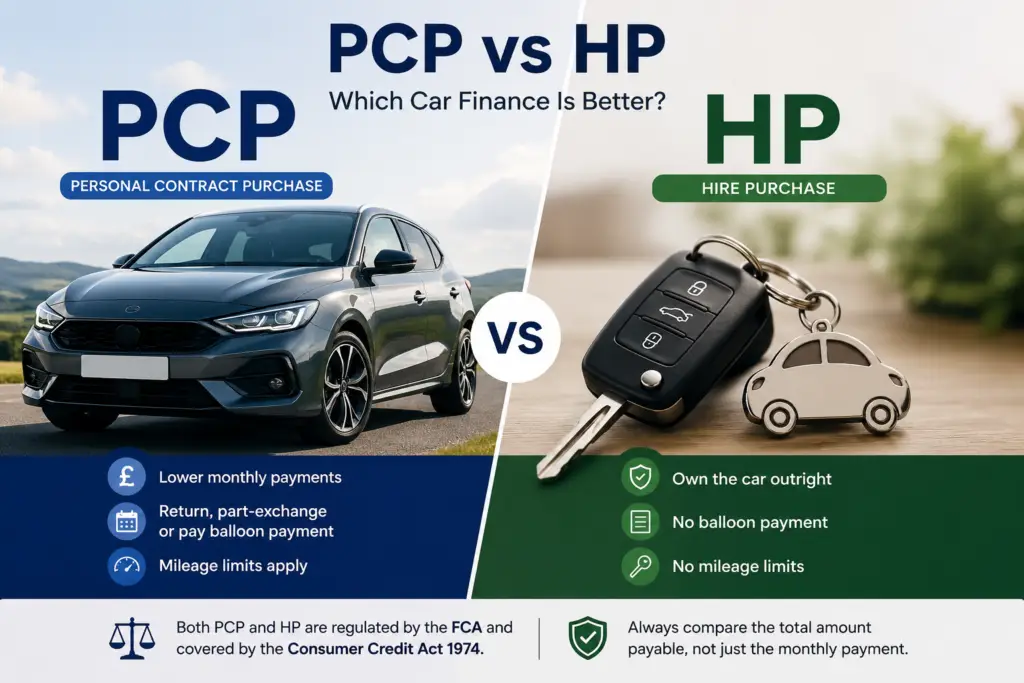
So balloon payment car finance is not only a way to lower the monthly payment. It is also where the depreciation risk sits. Our comparison of PCP vs HP and of PCP vs CS both turn on that difference.
How the balloon affects your right to hand the car back early
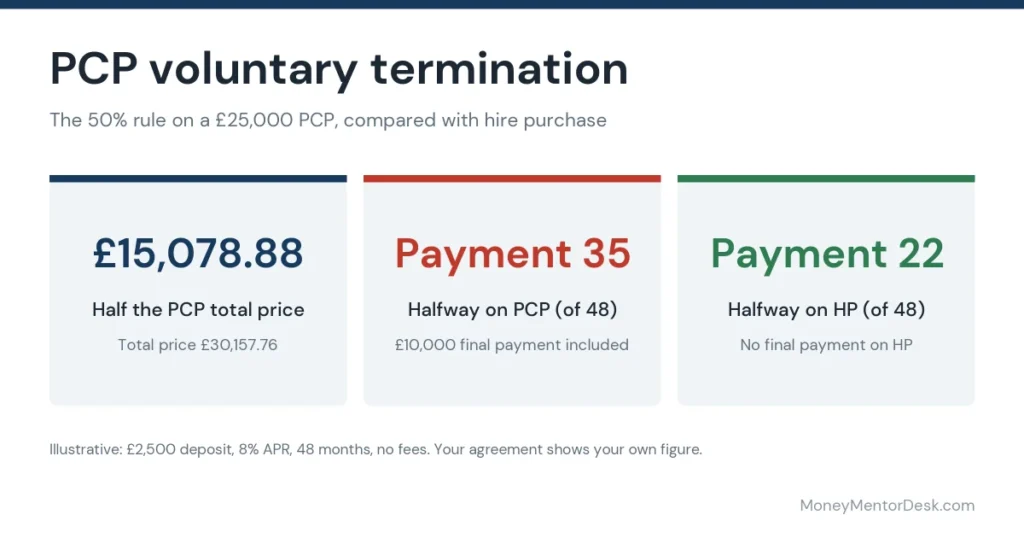
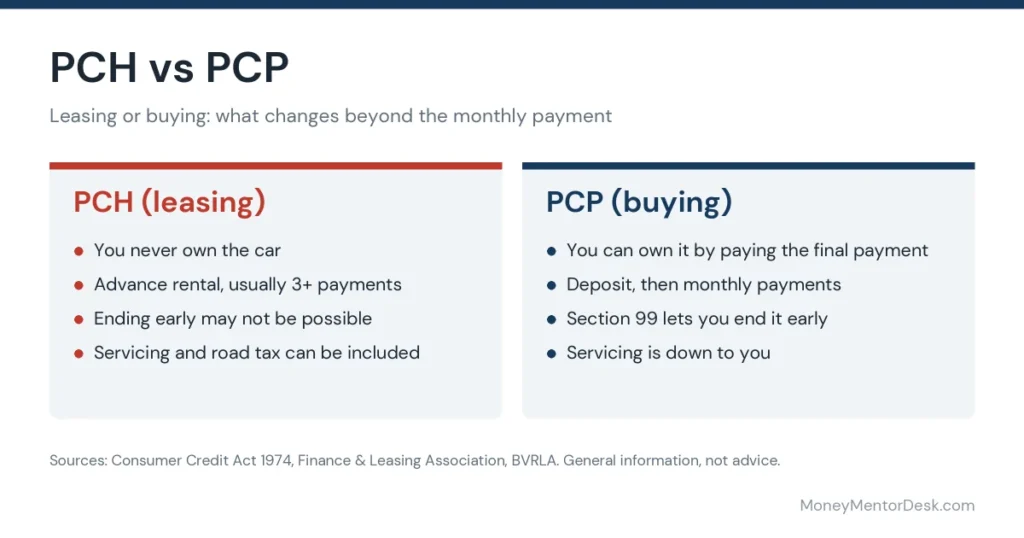
Section 99 of the Consumer Credit Act 1974 lets you end a regulated hire-purchase or conditional sale agreement at any time before the final payment falls due, and section 100 caps what you owe at half the total price. A PCP is normally a hire purchase agreement, so the right applies.
The balloon changes the timing. Because the total price includes it, half the total is a larger figure, while your monthly payments are smaller. On our example the halfway point moves from payment 22 with no balloon to payment 35 with a £10,000 balloon, and payment 41 with a £13,000 one. See PCP voluntary termination for how the half rule works.
Which agreements actually have a balloon payment
Balloon payment car finance is one product among several, and the confusion costs people money when they compare quotes. Not every car loan has a balloon.
| Agreement | Balloon payment? | What happens at the end |
|---|---|---|
| PCP | Always | Pay it, hand the car back, or part-exchange |
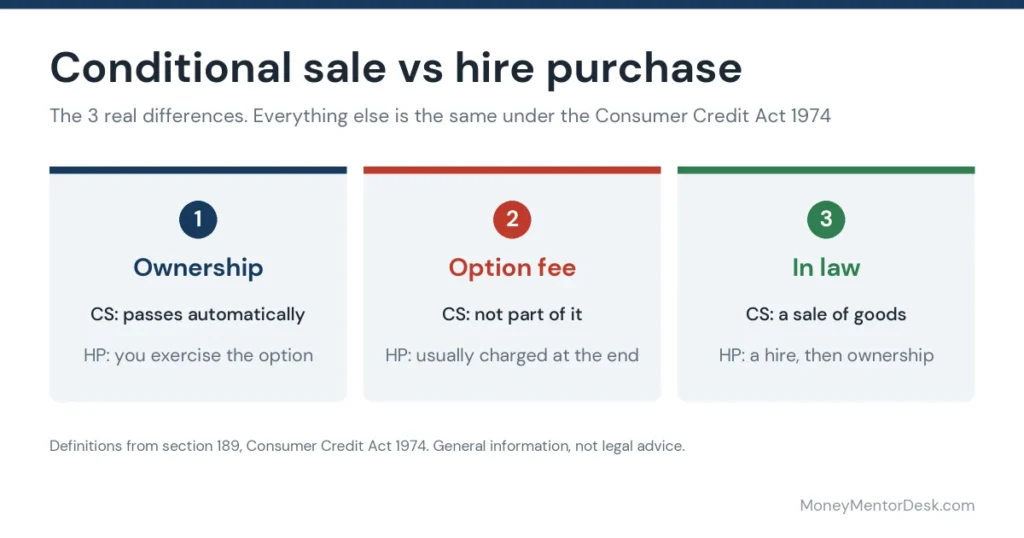
| Hire purchase | Normally not | The car is yours once the last payment and any option fee are made |
| Conditional sale | No | Ownership passes automatically when the conditions are met |
| Personal contract hire (leasing) | No | You return the car. You were never buying it |
| Personal loan | No | You owned the car from the start; the loan is separate |
Some lenders do offer hire purchase with a final lump sum, which behaves like a balloon while still ending in ownership. If a quote labelled HP has a large final figure, read the documents rather than the label, and check whether that figure is optional or compulsory. On a PCP it is optional. On an HP-with-balloon it usually is not, because you are committed to buying the car.
Balloon payments on used cars
Used cars can be financed on PCP, and they carry balloons in the same way. Two differences are worth knowing.
- The balloon is proportionally smaller. An older car has already taken its steepest depreciation, so there is less value left to guarantee at the end. Monthly payments make up more of the total.
- Lenders cap the age. Most set a maximum age for the car at the end of the agreement, which is why a five-year-old car may only be offered a shorter term.
The guarantee still applies. If a used car is worth less than its balloon at the end, handing it back is still the route, and the shortfall is still the lender’s.
What happens if you simply do not pay it
Choosing not to pay the balloon and failing to deal with it are two very different things.
Choosing not to pay means telling the lender you are handing the car back, arranging the collection or inspection, and ending the agreement cleanly. Nothing negative is recorded, because you have done what the contract allows.
Failing to deal with it is different. The balloon becomes a payment you have missed, the agreement falls into arrears, and that is reported to credit reference agencies like any other missed payment. The lender can then start the process of recovering the car. Once you have paid at least a third of the total price, section 90 of the Consumer Credit Act 1974 means it needs a court order to take the car without your agreement, but that is a protection against the worst outcome, not a reason to let it get there.
Contact the lender before the payment date. A PCP ending is routine administration for them, and the options above are the ones they will walk you through anyway.
Can you pay a balloon payment with a credit card?
Occasionally, and rarely sensibly. Most lenders do not accept cards for a five-figure settlement, because card acceptance costs them a percentage of the transaction. Where it is possible, the question becomes whether you want to move secured car finance onto unsecured revolving credit at a higher rate.
The arithmetic rarely works unless you have a genuine 0% promotional offer and can clear the balance inside it. We have worked that comparison through in detail, with the rate data, in paying off a car loan with a credit card.
Five mistakes worth avoiding
- Comparing quotes on the monthly payment. A larger balloon always produces a smaller monthly figure. Compare the total amount payable instead.
- Assuming you must pay it. Handing the car back is a contractual route, not a failure.
- Ignoring the mileage limit until the end. Excess mileage is charged per mile and only bites if you hand the car back. At 10p a mile, 10,000 miles over costs £1,000.
- Refinancing without a valuation. If the car is worth less than the balloon, refinancing means borrowing to keep something worth less than the debt.
- Forgetting the option-to-purchase fee, which is usually charged on top of the balloon when you keep the car.
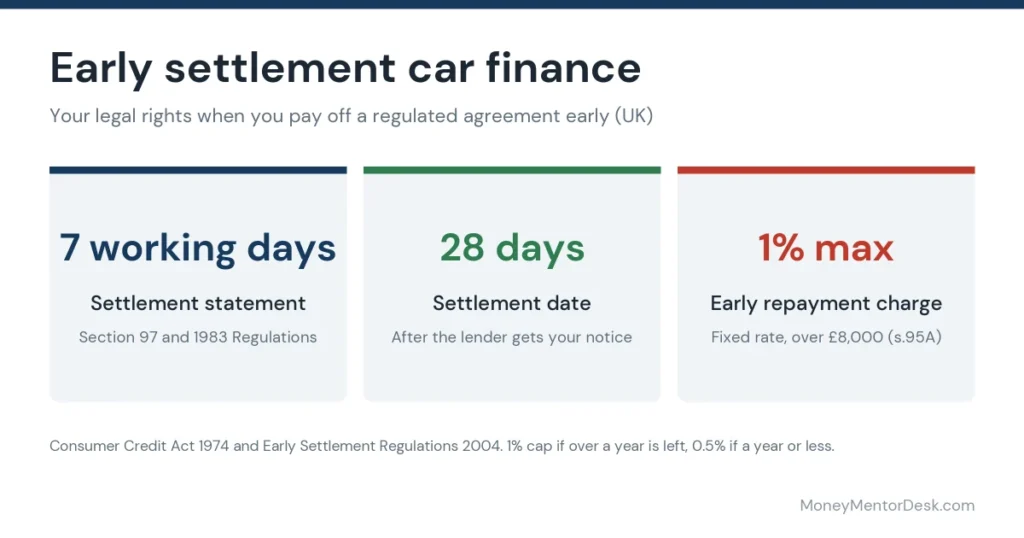
Balloon payment car finance rewards anyone who checks the total rather than the monthly figure. To see what any balloon does to your own numbers, use the UK car finance calculator, and if you want the loan gone sooner, early settlement explains the rebate you are entitled to under section 94.
Balloon payment car finance FAQs
What is a balloon payment on a car?
u003cpu003eIt is the large optional final payment at the end of a PCP, set at the start as the caru0026#8217;s guaranteed minimum future value. It is part of the caru0026#8217;s price that you agreed to defer, and you are charged interest on it throughout the agreement. Pay it to keep the car, or hand the car back instead.u003c/pu003e
How does a balloon payment work on a car?
u003cpu003eThe lender estimates what the car will be worth at the end, given your term and mileage limit. Your monthly payments cover the gap between the amount financed and that figure, plus interest on the whole balance. At the end you pay the balloon, hand the car back, part-exchange it, or refinance the balloon.u003c/pu003e
What if I cannot afford the balloon payment on my car?
u003cpu003eGet the car valued first. If it is worth more than the balloon, part-exchange it and use the surplus as your next deposit. If it is worth the same or less, hand it back, which is exactly what the guarantee is for. Refinance only if you genuinely want to keep that car, because on a u0026pound;10,000 balloon at 12.9% over 36 months it costs a further u0026pound;1,991 in interest.u003c/pu003e
Is a balloon payment compulsory?
u003cpu003eOn a PCP, no. Handing the car back is a contractual route, not a default, provided you are within the mileage limit and the car is in the agreed condition. On hire purchase structured with a final lump sum it usually is compulsory, because you are committed to buying the car.u003c/pu003e
Can you pay a car balloon payment monthly?
u003cpu003eOnly by refinancing it into a new agreement. The balloon itself falls due as a single amount. Spreading a u0026pound;10,000 balloon over 36 months at 12.9% APR costs about u0026pound;333 a month.u003c/pu003e
Do all car loans have a balloon payment?
u003cpu003eNo. PCP always does. Hire purchase and conditional sale normally do not, leasing does not because you never own the car, and a personal loan does not because you own the car from the start. Some hire purchase agreements are structured with a final lump sum, so read the documents rather than the label.u003c/pu003e
How do I avoid a balloon payment on a car?
u003cpu003eChoose hire purchase or conditional sale instead, where the monthly payments cover the whole price. It costs more each month and less overall: on a u0026pound;25,000 car at 8% APR over 48 months, hire purchase is u0026pound;546.35 a month against u0026pound;367.87 on a PCP with a u0026pound;10,000 balloon, but u0026pound;1,432.96 cheaper in total.u003c/pu003e
What happens if the car is worth less than the balloon payment?
u003cpu003eHand it back. The guaranteed minimum future value is a commitment by the lender, so if the car is worth less at the end that loss is theirs, not yours. This is the main protection a PCP gives you over hire purchase or conditional sale.u003c/pu003e
For how the balloon fits among the other options, see types of car finance in the UK.
Sources
- Consumer Credit Act 1974: section 99 and section 100 (voluntary termination and the half rule), section 94 (early settlement), legislation.gov.uk, checked 30 September 2026
- All monthly payments, totals and refinancing figures calculated by MoneyMentorDesk using the standard amortising formula, with the APR treated as an effective annual rate and no fees included
This guide is general information, not financial advice. Your agreement sets your balloon payment, your mileage limit and your fees. Check the paperwork before making a decision.
Written by Nimra Saleem for MoneyMentorDesk.com. Last reviewed on 30 September 2026 against the Consumer Credit Act 1974 on legislation.gov.uk.
Pingback: Car Finance Calculator UK: PCP vs HP Side by Side
Pingback: Types of Car Finance UK: 5 Options Compared
Pingback: PCP vs HP: 5 Differences and a Worked Cost Example (UK)